

Jack of all trades, master of none
though oftentimes better than master of one
The other day my colleagues and I were laughing about what I should call myself in a quickly-unravelling project. Master? Chief Awesomeness Officer? That bwitch? I suggested Queen of Everything, and we all agreed it was the title for me.
I’ve long wanted to write this blog. The main hurdle in my mind was that I didn’t have a set topic. ‘Work-life’ scopes it somewhat, but I wonder if there’s anything that couldn’t be turned into a work-related matter. On the other hand, I wanted to write this blog precisely because I didn’t have a set topic to write about.
That deterred me, though. I was researching hashtags on LinkedIn and noticed that each search rendered a list of people who ‘spoke’ about these hashtags. (I researched this observation and found out that it’s one of LinkedIn’s Creator Mode features.) What would my hashtags be? I couldn’t really pick the five you are allowed to have on your profile at any one time (you can of course switch them whenever). I don’t have an industry or job function I’m passionate about more than any other; and whatever political causes I may believe in just don’t have a place in my personal LinkedIn – at least for the time being. I tend to think that I should be able to use LinkedIn as my professional platform where it’s about, well, work. And not about the loosely-related stuff (I wouldn’t talk about how much I love a TV show just because ‘it helps me unwind after a long day at the office’. On the other hand, as a TV producer that would definitely be up my alley. But I digress.)
Multi-passionate
I was researching (it’s a very research-heavy post) the quote at the beginning: jack of all trades, master of none. D’Ana Joi wrote a piece on Medium around the full quote, noting that the first half is the one more often thrown around – and in her experience, at someone: ‘Often when you’ve heard the “Jack of all trades” phrase it’s been used to throw shade at you, because you’re not able to choose one thing as a multi-passionate.’1 It was this word multi-passionate that caught my eye. I then realized that I had in fact heard the term before; I follow Annie Petsche on TikTok and she talks about being multi-passionate. The joys of rediscovering something new…
A few years ago I read David Epstein’s Range. I read it at a time when I felt I had no useful skills to my name, whatsoever. Covid was still new and companies terrified, and the only hires made were for specialists – masters of one. I was, admittedly, very young and perhaps not even expected to be a master of any one thing, but it didn’t help that I didn’t even know what I might want to be a master of. Range: Why Generalists Triumph in a Specialized World, as the full title goes, changed the way I look at myself. I wasn’t an unemployable good-for-nothing; I was an aspiring good-for-everything Generalist!
A lot of recent research (there it is again) shows that the attitude towards specialization is changing. While lengthy and profound experience of an industry used to be the top quality searched for in executives, more broadly applicable skills like leadership and communication are now holding the top rungs. There’s many models nowadays on learners and specialized generalists, and generalized specialists; there’s the T-model where you have one area of very deep knowledge, and several other areas of more superficial (less profound, I should say) expertise, and in the PI model you’ve got two deep-seated legs to stand on.
Jacks and Renaissance Men
‘Jack of all trades, master of none’ seems to not have been an insult or a dismissive retort when it first appears in human history, in the 14th century. Used to describe an aspiring playwright called William Shakespeare, it was more of an acknowledgement of a curious mind. Multi-passionate, one might say (although Shakespeare did make a name as a playwright, rather a specialist track). Around the same time, l’uomo universale was considered the epitome of human genius, seen in the multi-passionate Leonardo da Vinci – sculptor, engineer, inventor, and more.
So when did it become an insult to be a jack of all trades? It is perplexing that in a world that is increasingly interconnected and interdisciplinary the people able to straddle several beasts should be thought of as jacks of all trades, masters of none.
Game of chess
And now, finally, to the imagery of this blog post: chess. When I was a little girl learning to play chess, I learnt to call the pawns ‘moukka’ in Finnish – fool, boor, unsophisticated. While they’re more commonly referred to as soldiers in Finnish (‘sotilas’), my childhood memory made me think of them in connection to jacks. The name/term ‘jack’ was often added to other nouns as a kind of a generic term for any person doing something or a tool used by someone (e.g. lumberjack, jackhammer). Gary Martin quotes the Oxford English Dictionary on the definition of the generic Jack: ‘A man of the common people; a lad, fellow, chap; especially a low-bred or ill-mannered fellow’ – so, moukka. I’ve made my loose connection, now for the kill.
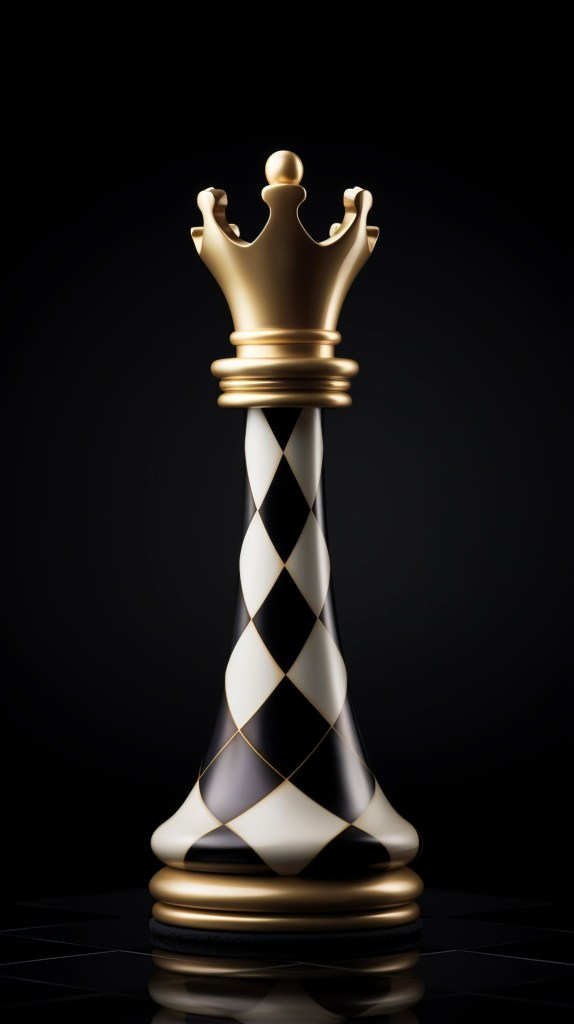
The cover photo for this post is gorgeous. A lone pawn on a surface, with a shadow of it cast behind it – its shadow that of the queen. For the uninitiated, this is not as unrealistic an image as you might expect: in chess, if a pawn manages to cross the board to the other side, the pawn can transform into any other piece (bar the king). And since the queen is the most powerful of all pieces, it’s often the queen that us amateurs choose (do not take chess advice from me. I frequently lose).

Any of the eight pawns per player can become a queen. Upon my research I found an interesting naming fact of pawns in English (regrettably on Wikipedia, with the sources inaccessible. My teachers and professors are burying their face in their hands); apparently each pawn had a different ‘occupation’, including a doctor, merchant, and a gambler. While I don’t think anyone should be a combination of these three specific occupations, I’m fascinated by the idea of pawns, the lowest-ranking, disposable, generic pieces, possessing the ability to rise to queens, and that a pawn can hold eight different occupations or roles before ascending to the throne.
Queen of everything, jack of all trades, multi-passionate, l’uomo (donna!) universale. I have no qualms with any of these as my title, some day in the future. I don’t have a one-track mind (hence this blog, Sidetracked), nor do I wish to be a one-trick pony. My sidetracks may cost me time in getting to my final destination, or even the next station, but along the way I’ll see things I never would otherwise. And those will take me to my destination a much better person. A real queen. Or a Jack. We all have our follies.
I’ve quoted several sources in this post, so here’s a list of them:
Britannica. Renaissance Man. n.d. Retrieved January 18, 2024. https://www.britannica.com/topic/Renaissance-man
Chess.com. Pawn. n.d. Retrieved January 18, 2024. https://www.chess.com/terms/chess-pawn
Epstein, David. The Range. https://davidepstein.com/the-range/
Kaupe, Kim. Creator Mode Features. September 21, 2021. https://www.linkedin.com/learning/linkedin-creator-mode/talks-about-hashtags
Martin, Gary. The meaning and origin of the expression: Jack of all trades. The Phrase Finder. n.d. Retrieved January 18, 2024. https://www.phrases.org.uk/meanings/jack-of-all-trades.html
Wikipedia. Pawn (Chess). n.d. Retrieved January 18, 2024. https://en.wikipedia.org/wiki/Pawn_(chess)
 Sidetracked